
Hip pain can make everyday activities such as walking, climbing stairs, sitting, or sleeping uncomfortable. What begins as mild discomfort may gradually affect your mobility, independence, and quality of life. Although hip pain is common among older adults, younger people can also experience it because of sports injuries, muscle strain, or other joint problems.
One of the common causes of persistent hip pain is hip arthritis, a condition in which the protective cartilage inside the joint becomes damaged or wears down. However, arthritis is not the only reason for hip pain. Tendon problems, bursitis, injuries, and fractures can also cause discomfort.
The right hip pain treatment depends on the underlying cause, severity of symptoms, age, activity level, and overall health. Recognizing the symptoms early and consulting an orthopedic specialist when needed can help you understand your condition and choose an appropriate treatment plan.
What Is Hip Pain?
The hip is a ball-and-socket joint that connects the thigh bone, called the femur, to the pelvis. Its structure allows the leg to move in different directions while supporting body weight during standing, walking, and other activities.
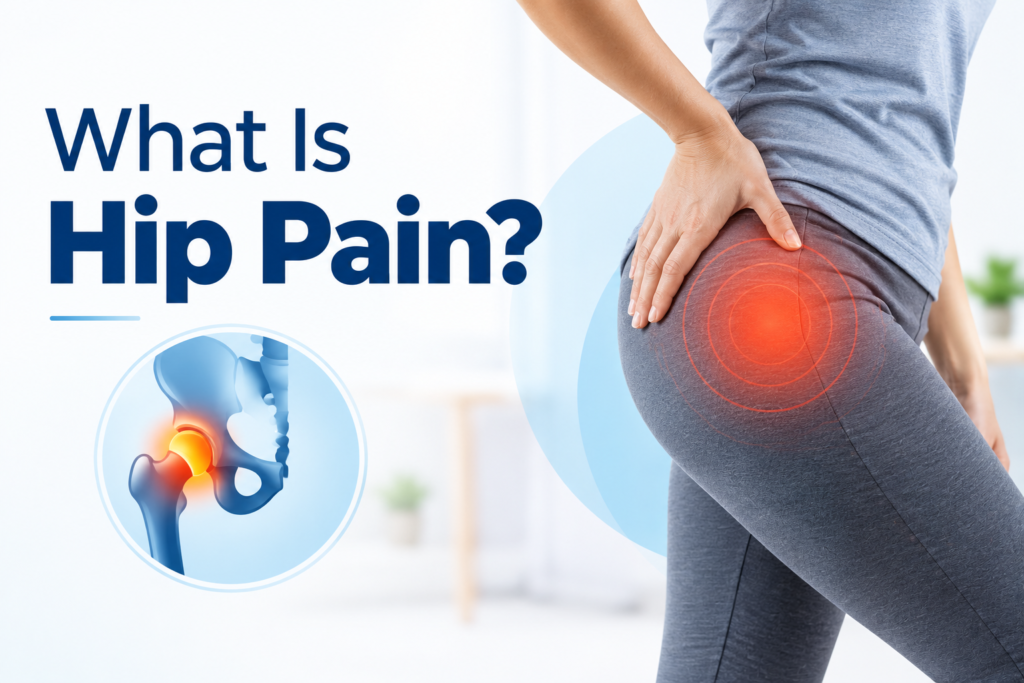
Hip pain refers to discomfort in or around this joint and the surrounding muscles, tendons, and other tissues.
Pain may be felt in several areas, including:
- Groin: Often associated with problems inside the hip joint, including arthritis.
- Outer hip: May be related to bursitis or tendon problems.
- Buttocks: Sometimes associated with hip conditions or pain originating in the lower back.
- Upper thigh: May occur with joint inflammation, injuries, or referred pain.
Because several conditions can cause similar symptoms, a proper medical assessment is important to determine the source of discomfort.
Common Causes of Hip Pain
1. Hip Arthritis
Hip arthritis is a common cause of long-term hip pain, particularly in older adults. Osteoarthritis develops when the cartilage that cushions the ends of the bones gradually deteriorates.
As the joint changes, movement may become painful and stiffness can develop.
Common symptoms of hip arthritis include:
- Pain around the groin, hip, or thigh
- Stiffness after sitting or resting
- Difficulty walking long distances
- Pain while climbing stairs
- Reduced flexibility
- Difficulty putting on shoes or socks
In more advanced cases, pain may occur during rest or disturb sleep.
Treatment depends on symptom severity and the extent of joint damage. Early cases may improve with exercise, physiotherapy, activity modification, and appropriate medication. Hip replacement may be considered when advanced arthritis significantly affects daily activities despite suitable non-surgical treatment.
2. Muscle Strain and Tendon Injuries
The muscles and tendons surrounding the hip help stabilize the joint and support movement. Sudden movements, excessive exercise, lifting, or repetitive activities can strain these tissues.
Symptoms may include localized pain, tenderness, and discomfort during certain movements.
Mild strains may improve with activity modification and gradual rehabilitation. More severe or persistent injuries may require assessment by an orthopedic specialist.
3. Bursitis
Bursae are small, fluid-filled sacs that reduce friction between bones, tendons, and muscles. When a bursa becomes irritated, it can cause pain around the hip.
Hip bursitis commonly causes discomfort on the outer side of the hip. The pain may become worse when lying on the affected side, climbing stairs, or walking for long periods.
Treatment may involve modifying aggravating activities, physiotherapy, and medication when appropriate.
4. Sports Injuries
Running, jumping, sudden twisting, and high-impact activities can place stress on the hip and surrounding tissues.
Sports-related hip pain may result from muscle strains, tendon injuries, cartilage problems, or other structural damage.
Persistent pain following sports activity should not be ignored, particularly when it limits movement or repeatedly returns during exercise.
5. Hip Fractures
A hip fracture is a serious injury that often occurs after a fall or accident. Older adults with osteoporosis are particularly vulnerable because their bones may be weaker.
Warning signs include:
- Sudden severe hip or groin pain
- Difficulty standing or walking
- Inability to bear weight on the affected leg
- Swelling or bruising following an injury
A suspected hip fracture requires urgent medical evaluation. Do not attempt to force movement or walk on the injured leg.
6. Tendinitis
Tendinitis refers to irritation or inflammation of a tendon. Around the hip, it may develop because of repetitive movements, overuse, or changes in physical activity.
Pain may worsen when using the affected muscles or performing specific movements. Treatment usually focuses on identifying the cause, modifying activities, and following an appropriate rehabilitation plan.
7. Pain Originating in the Lower Back
Not all pain around the hip comes from the hip joint itself. Problems involving the lower back or nearby nerves can cause discomfort that spreads into the buttocks or thigh.
A physical examination can help distinguish hip joint problems from spinal or nerve-related conditions.
Symptoms of Hip Problems
Hip conditions can cause different symptoms depending on the underlying problem.
Common signs include:
- Persistent pain around the hip or groin
- Stiffness after resting
- Difficulty walking or climbing stairs
- Reduced range of motion
- Pain while getting up from a chair
- Discomfort when lying on one side
- Pain during exercise
- Difficulty performing daily activities
Some patients may notice clicking or a catching sensation during movement. This symptom does not necessarily indicate a serious condition, but persistent discomfort or restricted movement should be evaluated.
If pain is progressively worsening or interfering with sleep and mobility, seek medical advice rather than relying on painkillers alone.
Who Is at Risk of Hip Pain?
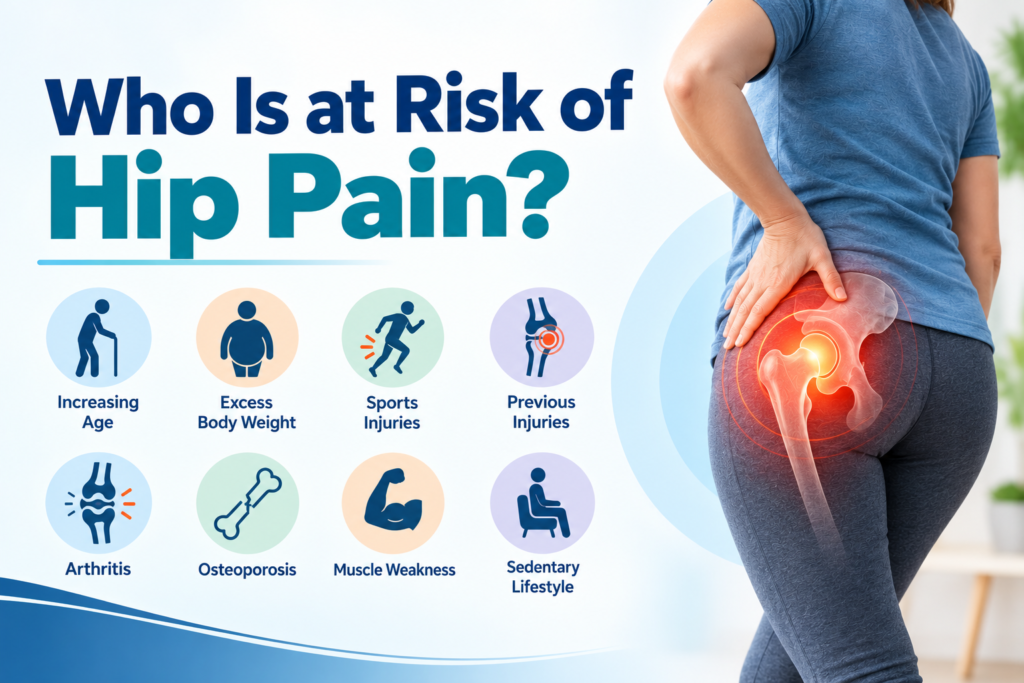
Several factors may increase the likelihood of developing hip problems.
Increasing age: Age-related changes can affect cartilage, bones, muscles, and tendons.
Excess body weight: Additional weight can increase mechanical stress on weight-bearing joints.
Previous injuries: Earlier fractures or sports injuries may contribute to later joint problems.
Repetitive physical activity: Repeated high-impact movements can place stress on the hip and surrounding tissues.
Muscle weakness: Weak hip and thigh muscles may affect joint support and movement.
Arthritis: Existing joint disease can cause pain, stiffness, and restricted mobility.
Osteoporosis: Weakened bones increase the risk of fractures, particularly following a fall.
Having a risk factor does not mean you will necessarily develop hip pain. However, maintaining strength, managing existing conditions, and seeking timely care can help protect mobility.
Hip Pain Treatment Options
There is no single treatment suitable for every hip condition. Effective hip pain treatment begins with identifying the cause and assessing how much the symptoms affect daily life.
1. Activity Modification
If certain movements worsen your pain, temporarily reducing those activities may help irritated muscles, tendons, or joints recover.
For example, you may need to reduce high-impact exercise or avoid movements that repeatedly trigger discomfort.
However, prolonged inactivity can contribute to muscle weakness and stiffness. The appropriate level of activity depends on the diagnosis and should be guided by a healthcare professional when symptoms persist.
2. Medication
A doctor may recommend pain-relieving or anti-inflammatory medicines depending on the cause of the pain and your medical history.
Not every medicine is suitable for every patient. Some painkillers can cause stomach, kidney, cardiovascular, or other side effects, particularly when used for long periods.
Avoid starting or increasing medication without appropriate medical advice.
3. Physiotherapy and Exercise
Physiotherapy can play an important role in treating many causes of hip pain.
A customized program may include:
- Strengthening the hip and thigh muscles
- Improving flexibility
- Restoring joint movement
- Improving balance and stability
- Correcting movement patterns
- Gradually returning to everyday activities
For people with hip arthritis, suitable strengthening and low-impact activities may help improve function and reduce discomfort.
Exercises should be selected according to the diagnosis. Do not continue an exercise that causes sharp or worsening pain.
4. Weight Management
Maintaining a healthy weight can reduce stress on the hip joints and make movement more comfortable for some patients.
A balanced diet combined with suitable physical activity can support joint function and general health. If walking is painful, a healthcare professional or physiotherapist can suggest appropriate alternatives.
5. Heat or Cold Therapy
Heat or cold may provide temporary symptom relief in selected situations.
- Cold packs may help relieve discomfort following some acute injuries.
- Gentle heat may help ease stiffness in certain chronic conditions.
Wrap cold packs or heating pads in a towel and avoid applying extreme temperatures directly to the skin. Seek medical advice if pain is severe, unexplained, or associated with significant injury.
6. Injections and Other Procedures
For selected patients, a specialist may consider an injection to help manage symptoms. The type of injection, expected benefits, and potential risks depend on the underlying diagnosis.
Injections are not suitable for every hip condition and do not necessarily reverse joint damage. Your doctor can explain whether a procedure is appropriate for your situation.
7. Hip Replacement Surgery
Hip replacement surgery may be considered for people with advanced hip arthritis or other severe joint damage when pain significantly affects daily activities and non-surgical treatments have not provided sufficient relief.
During the procedure, damaged portions of the joint are replaced with artificial components.
Potential benefits for appropriately selected patients include:
- Reduced joint pain
- Improved walking ability
- Better hip movement
- Greater independence in everyday activities
- Improved quality of life
As with any major surgery, hip replacement has risks and requires rehabilitation. The decision should be made after reviewing symptoms, examination findings, imaging results, overall health, and the patient’s goals.
Can Hip Arthritis Be Treated Without Surgery?
Yes. Many people with hip arthritis can initially manage their symptoms without surgery.
Depending on the severity of the condition, non-surgical care may include:
- Physiotherapy and strengthening exercises
- Appropriate low-impact physical activity
- Weight management
- Activity modification
- Medication when medically appropriate
- Selected injections when recommended by a specialist
These approaches may help reduce discomfort and maintain function. However, they cannot restore cartilage that has been significantly damaged by advanced osteoarthritis.
If pain continues to interfere with walking, sleeping, or everyday activities despite appropriate treatment, an orthopedic specialist can discuss whether hip replacement is a suitable option.
When Should You Consult an Orthopedic Surgeon?
Mild hip discomfort may improve with appropriate care, but certain symptoms require medical attention.
Consider consulting an orthopedic surgeon if you experience:
- Hip pain that persists or repeatedly returns
- Increasing stiffness or reduced movement
- Difficulty walking or climbing stairs
- Pain that disturbs sleep
- Symptoms that do not improve with initial care
- Recurrent discomfort during exercise
- Hip pain that interferes with work or daily activities
Seek urgent medical attention if you develop sudden severe hip pain after a fall or injury, cannot bear weight on the leg, or notice a visible deformity.
Early assessment can help identify the cause of pain and determine whether non-surgical treatment, further investigation, or surgery is required.
How Is Hip Pain Diagnosed?
An orthopedic specialist usually begins by discussing your symptoms, medical history, daily activities, and any previous injuries.
The physical examination may assess:
- Walking pattern
- Hip flexibility and movement
- Muscle strength
- Joint tenderness
- Pain during specific movements
- The possibility of referred pain from the lower back
Depending on the findings, diagnostic tests may be recommended.
X-rays: Often used to assess bone alignment, fractures, and changes associated with arthritis.
MRI: May help evaluate soft tissues, cartilage, tendons, and certain conditions that are not clearly visible on X-rays.
CT scans or ultrasound: May be useful in selected cases depending on the suspected problem.
Not every patient needs every test. Investigations should be chosen according to the clinical findings.
Tips to Maintain Healthy Hip Joints
Although not all hip conditions can be prevented, several habits can support joint health.
- Stay active: Choose appropriate activities that support strength and mobility.
- Strengthen supporting muscles: Follow suitable exercises for the hips, thighs, and core.
- Maintain a healthy weight: This may reduce stress on weight-bearing joints.
- Increase activity gradually: Avoid sudden increases in exercise intensity.
- Wear appropriate footwear: Supportive footwear may help with comfort and stability.
- Treat injuries promptly: Do not ignore persistent pain after sports or other physical activities.
- Protect bone health: Discuss osteoporosis assessment if you have risk factors or a fracture after a minor fall.
- Seek early advice: Persistent pain or stiffness deserves appropriate evaluation.
These measures support general joint health but cannot guarantee that arthritis or other hip problems will not develop.
Why Choose Dr. (Gp. Capt) Sandeep Gupta in Lucknow?
When hip pain affects your mobility, an appropriate orthopedic assessment can help you understand the cause and explore treatment options.
Dr. (Gp. Capt) Sandeep Gupta is Director of Orthopedics & Joint Replacement at Tender Palm Super Specialty Hospital, Lucknow. His professional background includes more than 26 years of orthopedic experience, along with previous roles at Apollo Medics, Army Hospital (R&R), Delhi, and Command Hospital, Air Force, Bangalore.
Patients seeking evaluation for hip pain can discuss their symptoms, examination findings, and treatment options with an orthopedic specialist. Depending on the diagnosis, care may involve non-surgical management, rehabilitation, or consideration of joint replacement when clinically appropriate.
Treatment recommendations should be based on the individual patient’s condition, needs, and medical assessment.
Frequently Asked Questions
What is the most common cause of hip pain?
Hip osteoarthritis is a common cause of persistent hip pain, especially in older adults. Muscle strains, tendon problems, bursitis, injuries, and referred pain from the back can also cause discomfort.
2. What is the best treatment for hip pain?
The best treatment depends on the cause. Options may include activity modification, physiotherapy, medication, weight management, selected injections, or surgery for certain severe conditions.
3. What are the symptoms of hip arthritis?
Common symptoms include groin pain, stiffness after resting, difficulty walking, reduced hip movement, and discomfort while climbing stairs or putting on shoes.
4. Can hip pain improve without surgery?
Yes. Many causes of hip pain can be managed without surgery. The appropriate treatment depends on the diagnosis and severity of symptoms.
5. Can physiotherapy help hip pain?
Physiotherapy may improve muscle strength, flexibility, movement, and function. Exercises should be tailored to the underlying condition.
6. When is hip replacement surgery recommended?
Hip replacement may be considered when advanced joint damage causes significant pain and disability despite appropriate non-surgical treatment.
7. Can excess weight worsen hip pain?
Excess body weight can increase mechanical stress on the hip joints and may aggravate symptoms in some patients.
8. When should I see an orthopedic surgeon for hip pain?
Seek an evaluation if pain persists, worsens, affects walking or sleep, or limits daily activities. Sudden severe pain after an injury requires prompt assessment.
Why does hip pain get worse at night?
Hip pain may worsen at night because of joint inflammation, certain sleeping positions, or pressure on irritated tissues. Persistent night pain should be assessed, especially if it is worsening or unexplained.
10. Can hip pain come from the lower back?
Yes. Problems involving the lower back or nearby nerves can cause pain in the buttocks or thigh that may be mistaken for hip joint pain.
Conclusion
Hip pain can result from several conditions, including muscle strain, tendon problems, injuries, fractures, and hip arthritis. Because these conditions require different approaches, identifying the underlying cause is the first step toward effective care.
The right hip pain treatment may involve physiotherapy, activity modification, medication, lifestyle changes, or surgery for selected patients with significant joint damage. Early assessment can help you understand your options and make informed decisions about your mobility and long-term joint health.
If persistent hip pain is interfering with your daily routine, consider consulting an orthopedic specialist for an evaluation.
Book an Orthopedic Consultation in Lucknow
Dr. (Gp. Capt) Sandeep Gupta
Director, Orthopedics & Joint Replacement
Tender Palm Super Specialty Hospital
Address: OPD No. 17, Tender Palm Super Specialty Hospital, Amar Shaheed Path, Near Ekana International Cricket Stadium Road, Sector-7, Gomti Nagar, Lucknow, Uttar Pradesh 226002
Phone: 9380677777
For persistent hip pain, seek professional advice to understand the cause and discuss appropriate treatment options.