
Running is an excellent way to improve cardiovascular fitness, build endurance, and maintain an active lifestyle. Whether you enjoy morning jogs, train for a marathon, or run occasionally for exercise, regular running can support your overall health. However, repetitive impact and sudden increases in training can sometimes lead to pain or injury.
Runners commonly experience problems involving the knees, ankles, feet, shins, and muscles. Some injuries develop gradually because of overuse, while others occur after a sudden twist, fall, or change in running technique.
Understanding common running injuries and knowing when to seek medical advice can help you protect your joints and return to exercise safely. The right running injury treatment depends on the location, severity, and underlying cause of the problem.
What Are Running Injuries?
Running injuries are conditions affecting the bones, joints, muscles, tendons, or other tissues involved in running. They may develop when the body is exposed to more repetitive stress than it can comfortably tolerate.
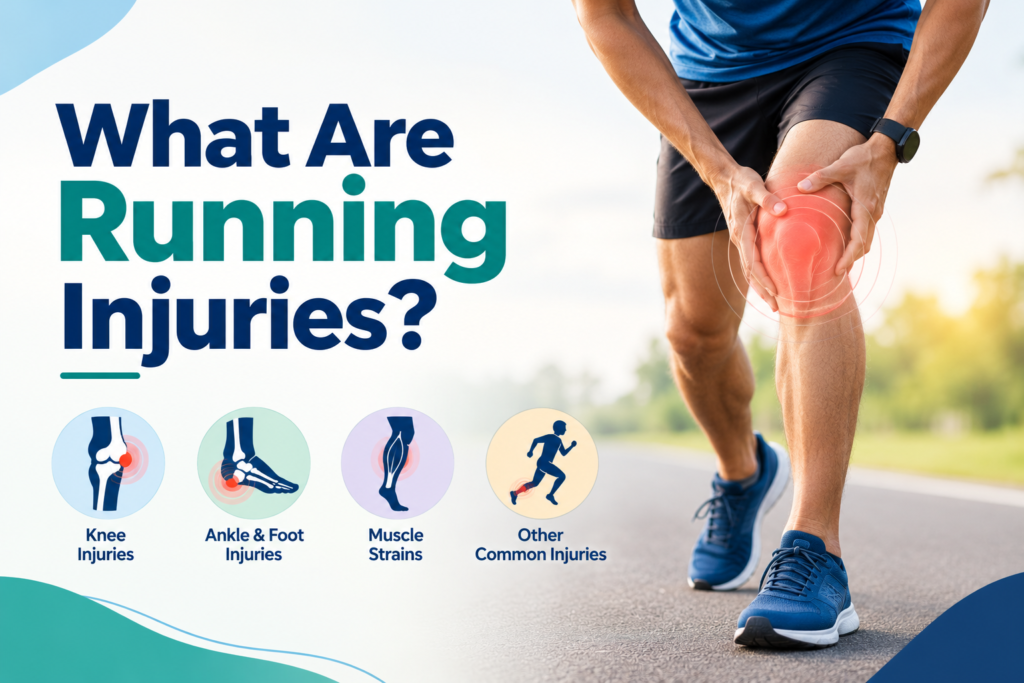
Common contributing factors include:
- Increasing running distance too quickly
- Running too frequently without adequate recovery
- Wearing unsuitable or excessively worn footwear
- Poorly managed training intensity
- Muscle weakness or limited flexibility
- Previous injuries
- Running on unfamiliar or uneven surfaces
Not every episode of soreness indicates an injury. However, persistent, worsening, or localized pain should not be ignored.
7 Common Running Injuries
1. Runner’s Knee
Runner’s knee, often referring to patellofemoral pain, causes pain around or behind the kneecap. It may develop when running places repeated stress on the structures around the knee.
Common symptoms include:
- Pain around the kneecap
- Discomfort while running downhill
- Pain when climbing or descending stairs
- Discomfort after sitting with the knees bent for a long time
Treatment may include temporarily reducing painful activities, strengthening the hip and thigh muscles, and following a suitable rehabilitation program.
2. Iliotibial Band Syndrome
The iliotibial band is a strong strip of tissue running along the outside of the thigh. Irritation in this region can cause pain on the outer side of the knee, particularly during repetitive running.
Symptoms may become more noticeable after a certain distance or while running downhill.
Treatment usually focuses on modifying training, addressing strength or movement issues, and gradually returning to running when symptoms improve.
3. Shin Splints
Shin splints cause pain along the inner edge of the shinbone. They are often associated with repetitive loading, sudden increases in training, or changes in running surfaces.
Runners may notice pain during or after exercise. Persistent or sharply localized shin pain needs medical assessment because a stress fracture can sometimes cause similar symptoms.
Reducing painful activity and reviewing training intensity are important initial steps.
4. Achilles Tendinopathy
The Achilles tendon connects the calf muscles to the heel bone. Repeated loading can cause pain and stiffness in this tendon.
Common symptoms include:
- Pain above the heel
- Morning stiffness
- Discomfort when pushing off during running
- Tenderness along the tendon
Treatment may involve adjusting running activity and following a progressive strengthening program under appropriate guidance.
A sudden popping sensation, severe pain, or difficulty pushing off the foot may indicate a tendon rupture and requires urgent assessment.
5. Plantar Fasciitis
Plantar fasciitis causes pain around the bottom of the heel and foot. The discomfort is often worse during the first steps in the morning or after sitting for a long time.
Repeated loading, training changes, and individual foot mechanics may contribute.
Management may include activity modification, suitable footwear, stretching, and strengthening exercises tailored to the person’s symptoms.
6. Muscle Strains
Running can strain the calf, hamstring, quadriceps, or other muscles, especially during sprinting, sudden acceleration, or fatigue.
Symptoms may include localized pain, tenderness, swelling, and difficulty using the affected muscle.
Mild strains may improve with appropriate activity modification and gradual rehabilitation. Severe pain, substantial swelling, or difficulty walking warrants medical evaluation.
7. Stress Fractures
Stress fractures are small cracks in bone that develop when repetitive loading exceeds the bone’s ability to recover. They may occur in the shin, foot, or other weight-bearing bones.
Warning signs include localized pain that worsens with activity and tenderness over a specific area. Pain may eventually occur during ordinary walking or at rest.
If a stress fracture is suspected, stop running and seek medical assessment. Continuing to run can worsen the injury and delay recovery.
Common Knee Injuries in Runners
Knee injuries are among the concerns that can interrupt a runner’s training routine. Not all knee pain has the same cause, so identifying the source is important.
Common conditions include:
- Patellofemoral pain: Pain around or behind the kneecap.
- Iliotibial band syndrome: Pain on the outer side of the knee.
- Tendon problems: Pain around the tendons that support the knee.
- Meniscus injuries: Problems involving the cartilage that helps cushion the knee, sometimes following twisting movements.
- Ligament injuries: Injuries that can occur after sudden changes in direction or other traumatic movements.
If knee pain persists, causes swelling, limits movement, or makes it difficult to bear weight, consult an orthopedic specialist. Sudden severe swelling or an injury associated with instability requires prompt evaluation.
What Causes Running Injuries?
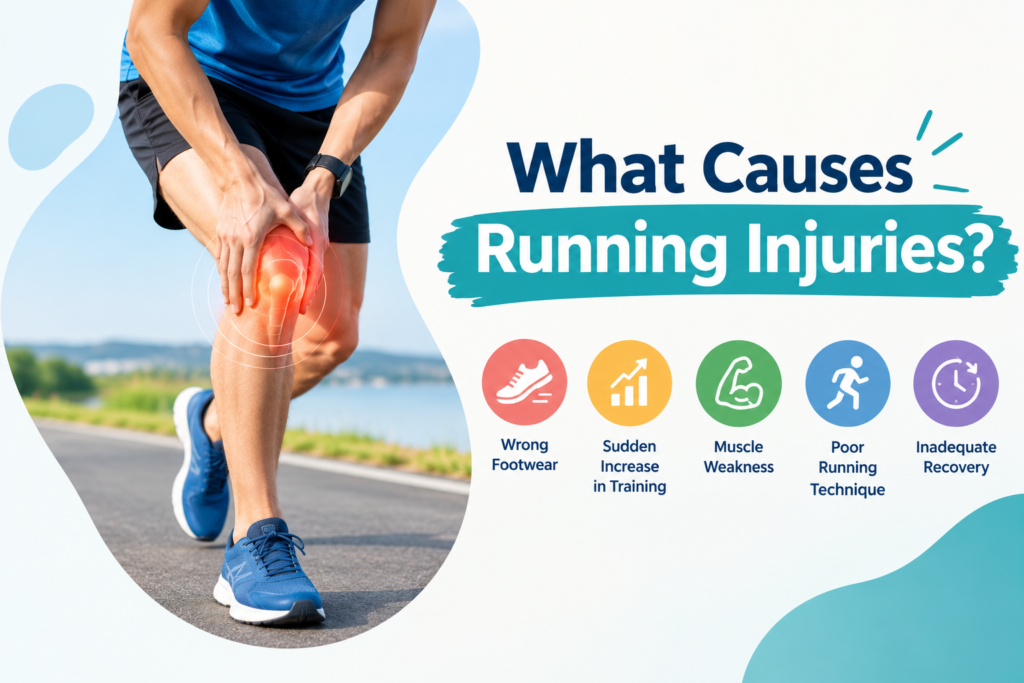
Running injuries usually develop because of a combination of training, physical, and environmental factors.
Sudden Training Increases
Increasing distance, speed, or frequency too quickly may place excessive stress on tissues that have not adapted to the workload.
Inadequate Recovery
Muscles, tendons, and bones need time to recover between demanding sessions. Repeated intense training without sufficient recovery may increase injury risk.
Muscle Weakness
Weakness in the hips, thighs, calves, or core may affect movement control and the way forces are distributed during running.
Unsuitable Footwear
Shoes that are uncomfortable, poorly fitted, or excessively worn may contribute to discomfort. Footwear needs vary between runners.
Previous Injuries
Returning to full training before an injury has adequately recovered may increase the risk of recurring symptoms.
Training Surface and Technique
Changes in terrain, running technique, or training conditions may alter the loads placed on the body. No single running style or surface is best for everyone.
Running Injury Treatment Options
The appropriate running injury treatment depends on the diagnosis and severity of symptoms. Treatment should aim to relieve discomfort, support healing, and restore function without causing further injury.
1. Modify Your Training
Temporarily reduce or stop activities that cause pain. Depending on the injury, low-impact exercise may be possible, but avoid running through worsening symptoms.
Do not resume full training simply because the pain has temporarily decreased.
2. Use Cold Therapy When Appropriate
A cold pack wrapped in a towel may help provide temporary relief after some acute injuries. Apply it for short periods and avoid direct contact between ice and skin.
Cold therapy can relieve symptoms but does not replace assessment or treatment of a significant injury.
3. Physiotherapy and Rehabilitation
Physiotherapy can help many runners recover by addressing strength, mobility, balance, and movement control.
A rehabilitation plan may include:
- Hip and thigh strengthening
- Calf and lower-leg exercises
- Flexibility work where appropriate
- Balance and coordination training
- Gradual return-to-running exercises
The program should match the specific injury and the runner’s stage of recovery.
4. Medication
A healthcare professional may recommend appropriate pain-relieving medication when necessary. Medication suitability depends on individual health conditions and other medicines being taken.
Avoid using painkillers simply to continue running through an injury.
5. Medical Assessment and Imaging
An orthopedic specialist may examine the affected area and assess movement, strength, tenderness, and joint stability.
X-rays or other imaging may be recommended when a fracture, significant structural injury, or another specific condition is suspected. Some injuries, including early stress fractures, may not be visible on initial X-rays.
6. Advanced Treatment or Surgery
Most common overuse injuries do not require surgery. However, selected injuries, such as certain fractures, significant ligament tears, or complete tendon ruptures, may require specialized treatment or an operation.
Treatment decisions depend on the injury, the person’s activity goals, and clinical findings.
How Can Runners Prevent Injuries?
Although not every running injury can be prevented, consistent training habits can help reduce avoidable risks.
1. Increase Training Gradually
Build distance, speed, and frequency progressively rather than making sudden changes.
2. Warm Up Before Running
Begin with easy movement and gradually increase intensity. Dynamic movements may help prepare your body for exercise.
3. Strengthen Supporting Muscles
Include suitable strengthening exercises for the hips, thighs, calves, and core.
4. Allow Adequate Recovery
Alternate demanding sessions with easier activity or rest when needed. Persistent fatigue and pain may indicate that your training load needs adjustment.
5. Choose Comfortable Footwear
Wear properly fitting running shoes that feel comfortable and are appropriate for your running needs. Replace excessively worn footwear.
6. Pay Attention to Pain
Mild temporary soreness is not the same as a significant injury. Stop and seek advice if pain is sharp, worsening, localized, or changes the way you walk or run.
7. Maintain Good Nutrition and Hydration
A balanced diet with adequate energy, protein, calcium, and vitamin D supports general health and bone maintenance. Hydration is also important, particularly during prolonged exercise.
8. Return to Running Gradually
After an injury, follow a structured return-to-running plan when appropriate. Increase activity only as symptoms and function allow, following guidance from your healthcare professional.
The Role of Sports Medicine in Running Injuries
Sports medicine focuses on the prevention, assessment, treatment, and rehabilitation of exercise-related injuries.
A sports medicine professional or orthopedic specialist can help determine whether pain is related to an overuse injury, joint condition, muscle problem, or fracture.
Care may involve:
- Clinical examination
- Appropriate imaging
- Training and activity modification
- Rehabilitation planning
- Guidance on returning to exercise
- Referral for specialized treatment when required
The goal is to help runners recover safely and return to physical activity while addressing factors that may contribute to recurring injuries.
When Should You Consult an Orthopedic Doctor?
Seek medical advice if you experience:
- Pain that persists or repeatedly returns
- Knee swelling or reduced movement
- Pain that worsens every time you run
- Localized bone tenderness
- Difficulty walking or bearing weight
- A sudden popping sensation with weakness
- Joint instability after an injury
Seek urgent medical care for a suspected fracture, major deformity, inability to bear weight after an injury, or a suspected tendon rupture.
Frequently Asked Questions
1. What are the most common running injuries?
Common running injuries include runner’s knee, iliotibial band syndrome, shin splints, Achilles tendinopathy, plantar fasciitis, muscle strains, and stress fractures.
2. How can I treat a running injury?
Treatment depends on the injury. It may include modifying training, physiotherapy, appropriate medication, and medical evaluation. Suspected fractures or significant tendon injuries require prompt assessment.
3. Should I continue running if my knee hurts?
Do not continue running through sharp, worsening, or persistent knee pain. Reduce the activity that causes symptoms and seek medical advice if pain does not improve or affects normal movement.
4. Can running cause permanent knee damage?
Running does not automatically cause permanent knee damage. Persistent pain can have several causes, so assessment is important to identify and treat the underlying problem.
5. How can I prevent shin splints?
Increase training gradually, allow recovery, use comfortable footwear, and address strength or training issues. Persistent or localized shin pain should be evaluated to rule out a stress fracture.
6. When can I return to running after an injury?
Return timing depends on the type and severity of the injury. You should be able to resume the relevant activities safely without worsening symptoms and follow professional guidance where needed.
7. Does physiotherapy help running injuries?
Physiotherapy can improve strength, mobility, balance, and movement control and may help runners return to activity safely.
8. When should I see an orthopedic specialist?
Consult a specialist if pain persists, swelling develops, walking becomes difficult, or you suspect a fracture, tendon rupture, or significant knee injury.
Conclusion
Running can be an excellent way to stay active, but repetitive stress, sudden training changes, and inadequate recovery can contribute to injuries involving the knees, feet, ankles, and muscles.
Understanding common running injuries and following sensible prevention strategies can help you protect your joints and maintain a consistent exercise routine. The right running injury treatment depends on identifying the underlying condition and choosing appropriate care, which may include training modification, physiotherapy, medication, or specialized treatment.
Do not ignore persistent pain or try to push through a suspected serious injury. Early assessment can help you understand the problem and make a safer return to running.
Orthopedic Care in Lucknow
Dr. (Gp. Capt) Sandeep Gupta
Director, Orthopedics & Joint Replacement
Tender Palm Super Specialty Hospital, Lucknow
For persistent knee pain, sports-related injuries, or other orthopedic concerns, consult an orthopedic specialist for an appropriate evaluation and treatment plan.
Address: OPD No. 17, Tender Palm Super Specialty Hospital, Amar Shaheed Path, Near Ekana International Cricket Stadium Road, Sector-7, Gomti Nagar, Lucknow, Uttar Pradesh 226002
Phone: 9380677777