
Osteoporosis is often called a “silent bone disease” because it can weaken bones for years without causing noticeable symptoms. Many people only discover they have osteoporosis after experiencing a fracture from a minor fall, bending, coughing, or even routine daily activities.
Healthy bones are strong and dense. However, with osteoporosis, bones gradually become thinner, weaker, and more fragile. This significantly increases fracture risk, particularly in the hip, spine, and wrist.
The good news is that early diagnosis and proper osteoporosis treatment can help slow bone loss, strengthen bones, and reduce the chances of serious fractures.
What Is Osteoporosis?
Osteoporosis is a condition in which bone density and bone quality decrease, making the skeleton fragile. Our bones constantly undergo a natural process of breakdown and rebuilding. When bone loss happens faster than new bone formation, bones gradually become weaker.
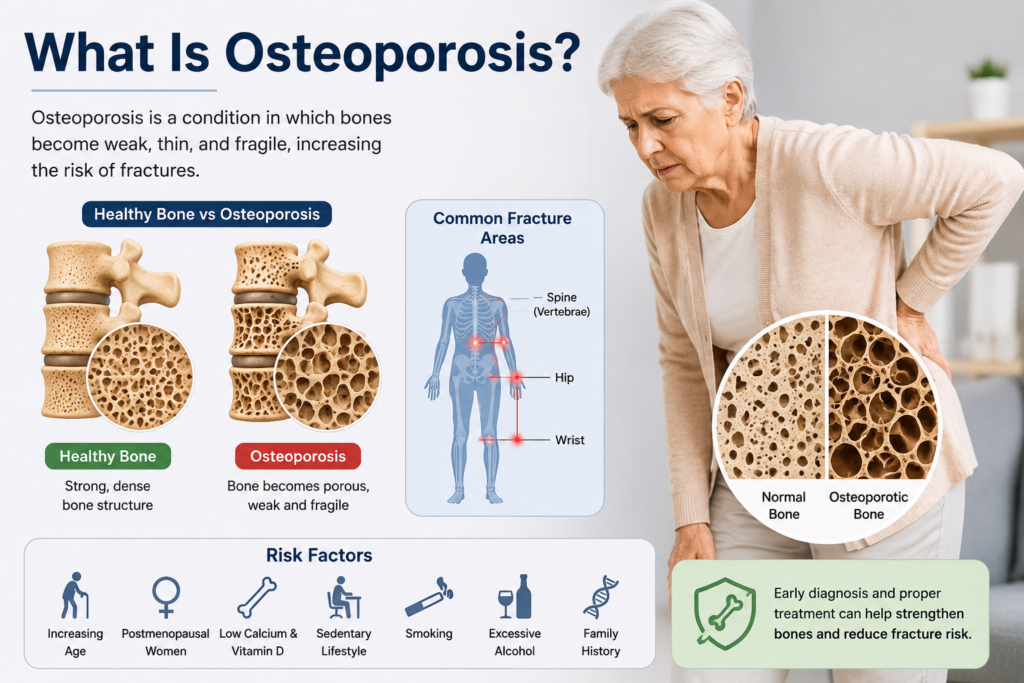
Because this process develops slowly, osteoporosis may remain unnoticed for a long time.
People with osteoporosis are more vulnerable to fractures, even after injuries that would normally not cause a broken bone in healthy individuals.
Why Is Osteoporosis Called a Silent Disease?
One of the biggest challenges with osteoporosis is the lack of early warning signs.
Unlike many other health conditions, osteoporosis usually does not cause pain during its initial stages. A person may continue with normal activities without realizing that their bones are becoming weaker.
In many cases, the first sign is a fracture.
This is why awareness, regular health checkups, and timely bone density evaluation are important, especially for people with known risk factors.
Common Causes of Osteoporosis
Several factors can contribute to bone loss and the development of osteoporosis.
1. Aging
Bone density naturally decreases with age. As people grow older, the body’s ability to rebuild bone may slow down.
2. Hormonal Changes
Hormonal changes can significantly affect bone health. Women may experience accelerated bone loss after menopause due to reduced estrogen levels.
3. Low Calcium Intake
Calcium is essential for maintaining strong bones. A long-term lack of calcium in the diet can contribute to reduced bone density.
4. Vitamin D Deficiency
Vitamin D helps the body absorb calcium effectively. Low vitamin D levels may negatively affect bone strength.
5. Lack of Physical Activity
Regular weight-bearing exercise helps maintain bone strength. A sedentary lifestyle can contribute to weaker bones over time.
6. Family History
A family history of osteoporosis or fractures may increase an individual’s risk.
7. Smoking and Excessive Alcohol Consumption
Certain lifestyle habits can negatively affect bone health and increase the likelihood of osteoporosis.
8. Certain Medical Conditions and Medications
Some health conditions and long-term use of specific medications may contribute to bone loss. Patients should discuss these risks with their doctor.
Who Is at Higher Risk of Osteoporosis?
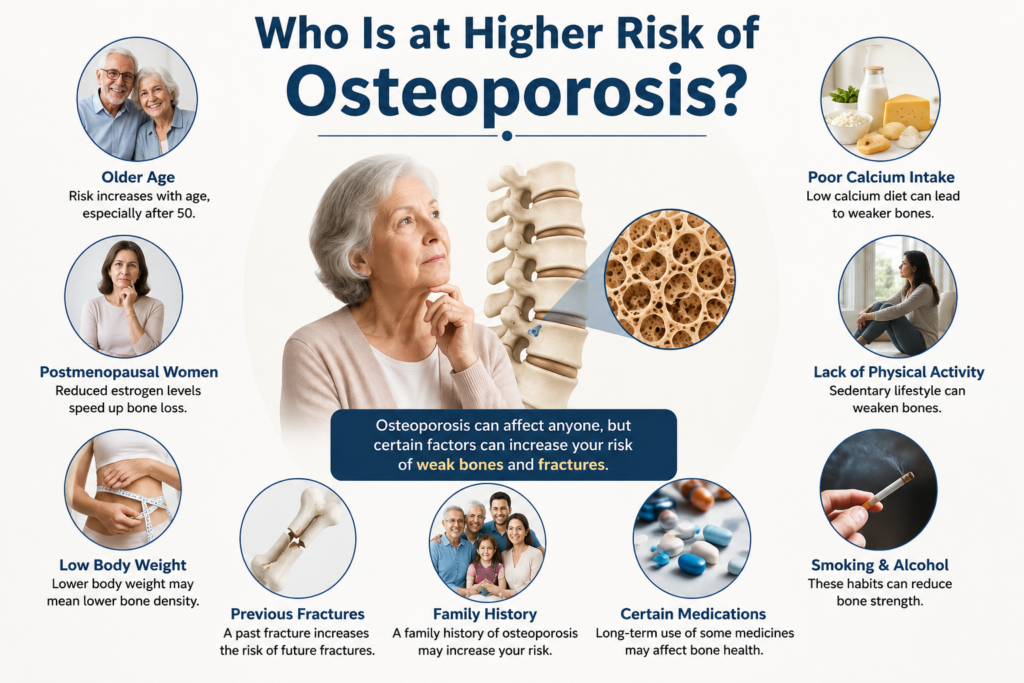
Although anyone can develop osteoporosis, certain groups have a higher risk.
Risk factors include:
- Older age
- Postmenopausal women
- Family history of osteoporosis
- Low body weight
- Previous fractures
- Poor calcium intake
- Vitamin D deficiency
- Physical inactivity
- Smoking
- Excessive alcohol consumption
- Long-term use of certain medications
Having one or more risk factors does not necessarily mean that a person will develop osteoporosis. However, it highlights the importance of preventive care and regular evaluation.
Symptoms of Osteoporosis
Osteoporosis often causes no symptoms in its early stages. As bones become weaker, some signs may appear.
Possible symptoms include:
- Frequent fractures
- Back pain
- Loss of height over time
- Stooped or hunched posture
- Fractures occurring after minor falls or injuries
- Persistent pain following a spinal compression fracture
A sudden fracture from a minor injury should never be ignored, particularly in older adults.
How Osteoporosis Increases Fracture Risk
Weak bones are more susceptible to fractures. Osteoporosis-related fractures commonly occur in the:
Hip
Hip fractures can seriously affect mobility and independence. They often require surgical treatment and rehabilitation.
Spine
Spinal fractures, also called vertebral compression fractures, can cause back pain, loss of height, and changes in posture.
Wrist
Wrist fractures commonly occur when a person falls and instinctively uses their hands to protect themselves.
Because fractures can significantly affect quality of life, reducing fracture risk is one of the main goals of osteoporosis treatment.
How Is Osteoporosis Diagnosed?
Early diagnosis plays an important role in protecting bone health.
A doctor may recommend evaluation based on age, symptoms, medical history, previous fractures, and other risk factors.
Common diagnostic approaches include:
Bone Density Test
A bone mineral density test can help assess bone strength and identify reduced bone density.
Medical History
Your doctor may ask about:
- Previous fractures
- Family history
- Diet and lifestyle
- Physical activity
- Current medications
- Other health conditions
Additional Investigations
In some cases, blood tests or other investigations may be recommended to identify underlying causes contributing to bone loss.
Osteoporosis Treatment Options
Effective osteoporosis treatment depends on several factors, including age, bone density, fracture history, overall health, and individual risk.
Treatment generally focuses on slowing bone loss, improving bone strength, and preventing fractures.
1. Calcium and Vitamin D
Adequate calcium and vitamin D intake is important for maintaining healthy bones.
However, supplements should only be taken according to medical advice, as individual requirements may vary.
2. Regular Exercise
Exercise can play an important role in maintaining bone strength and improving balance.
Helpful activities may include:
- Walking
- Weight-bearing exercises
- Strength training
- Balance exercises
- Guided physiotherapy
Exercise programs should be appropriate for the individual’s age and bone condition.
3. Medications
Doctors may recommend medications for patients with significant osteoporosis or a high risk of fractures.
The choice of medication depends on the patient’s individual medical condition and fracture risk.
4. Fall Prevention
Preventing falls is an important part of reducing fracture risk.
Simple measures include:
- Keeping floors free from obstacles
- Using proper footwear
- Improving lighting at home
- Installing support rails when necessary
- Addressing vision problems
- Working on balance and muscle strength
Can Osteoporosis Be Prevented?
While aging cannot be stopped, several healthy habits can support better bone health.
Eat a Bone-Healthy Diet
Include foods that provide important nutrients for bone health.
Stay Physically Active
Regular exercise helps maintain muscle strength, balance, and bone health.
Get Adequate Sunlight and Vitamin D
Vitamin D plays an important role in calcium absorption. Discuss appropriate vitamin D requirements with a healthcare professional.
Avoid Smoking
Smoking can negatively affect overall bone health.
Limit Excessive Alcohol
Excessive alcohol consumption may contribute to poor bone health and increase the risk of falls.
Get Regular Health Checkups
People at higher risk should discuss bone health screening with their doctor.
When Should You See an Orthopedic Doctor?
You should consider consulting a healthcare professional if you experience:
- A fracture after a minor fall
- Repeated fractures
- Persistent unexplained back pain
- Noticeable loss of height
- A gradually stooped posture
- Concerns about weak bones
- A strong family history of osteoporosis
Early evaluation can help identify bone problems before a serious fracture occurs.
Why Early Osteoporosis Treatment Matters
Ignoring osteoporosis can lead to complications that significantly affect mobility and independence.
A fracture can result in:
- Chronic pain
- Reduced mobility
- Difficulty performing daily activities
- Long recovery periods
- Loss of independence
Early osteoporosis treatment focuses not only on bone density but also on preventing fractures and maintaining an active lifestyle.
Frequently Asked Questions
1. Can osteoporosis be cured completely?
Osteoporosis management focuses on slowing bone loss, improving bone strength, and reducing fracture risk. The treatment approach depends on the individual’s condition.
2. What is the first sign of osteoporosis?
Osteoporosis often has no early symptoms. In many cases, the first noticeable sign is a fracture after a minor injury or fall.
3. Which bones are most commonly affected by osteoporosis?
Osteoporosis-related fractures commonly affect the hip, spine, and wrist.
4. Can exercise help with osteoporosis?
Appropriate weight-bearing, strengthening, and balance exercises can support bone and muscle health. Exercise should be planned according to individual health needs.
5. Who should get checked for osteoporosis?
Older adults, postmenopausal women, people with previous fractures, and individuals with significant risk factors should discuss bone health evaluation with their doctor.
Protect Your Bones Before a Fracture Happens
Osteoporosis may develop silently, but its consequences can be serious. The first fracture should not be the first warning sign.
Understanding your risk factors, maintaining a healthy lifestyle, and seeking timely medical evaluation can help protect your bones.
If you are concerned about weak bones, recurring fractures, or increasing fracture risk, consult an orthopedic specialist for proper evaluation and guidance. A personalized approach to osteoporosis treatment can help improve bone health and reduce the risk of future complications.