
Joint pain is one of the most common reasons people visit an orthopedic doctor. Whether it’s a dull ache in your knees after a long day, stiffness in your shoulders, or sudden swelling in your ankles, joint pain can make even simple daily activities challenging. While occasional discomfort may result from overuse, persistent or severe pain often signals an underlying medical condition that requires proper evaluation.
Many people assume that joint pain is simply a part of aging, but this isn’t always true. Joint pain can affect young adults, athletes, working professionals, and older adults alike. The underlying causes range from injuries and inflammation to arthritis, infections, and autoimmune disorders. Identifying the exact cause is the first step toward effective treatment and long-term relief.
In this guide, we’ll explore the top 10 causes of joint pain, their symptoms, risk factors, treatment options, and when you should consult an orthopedic specialist.
What Is Joint Pain?
A joint is the point where two or more bones meet, allowing your body to move smoothly. Healthy joints are supported by cartilage, ligaments, tendons, muscles, and synovial fluid, all working together to provide stability and flexibility.
Joint pain refers to discomfort, soreness, stiffness, or inflammation affecting one or more joints. It may occur suddenly due to an injury or develop gradually over time because of wear and tear or chronic disease.
The most commonly affected joints include:
- Knees
- Hips
- Shoulders
- Ankles
- Elbows
- Wrists
- Fingers
Joint pain may be mild and occasional or severe enough to interfere with walking, climbing stairs, lifting objects, or even sleeping.
Top 10 Causes of Joint Pain
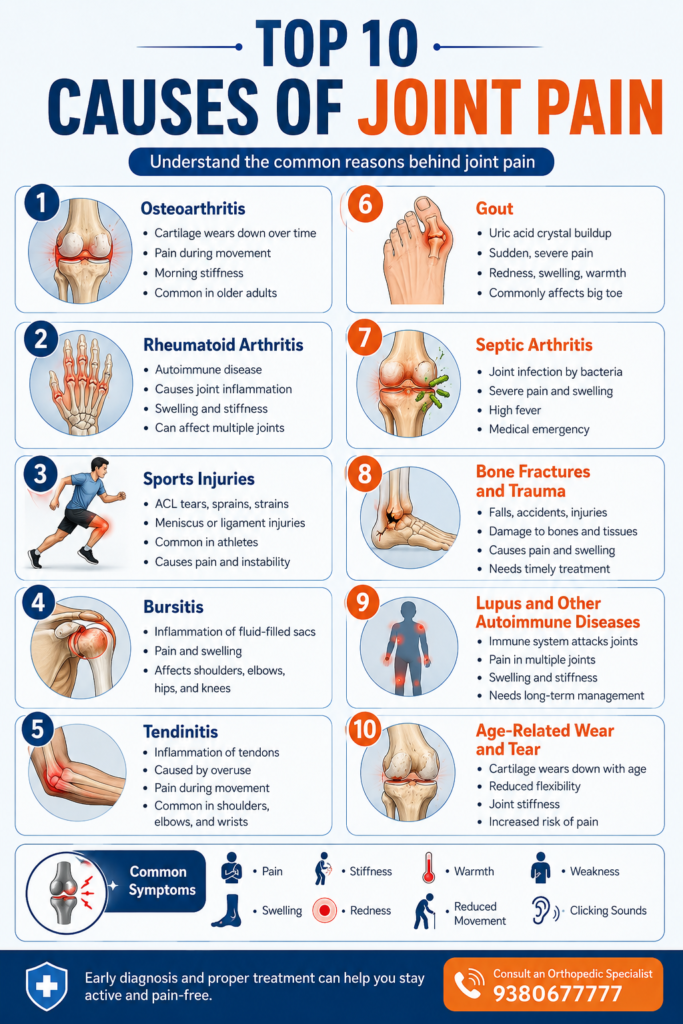
1. Osteoarthritis
Osteoarthritis is the most common cause of joint pain, particularly among older adults. It occurs when the protective cartilage that cushions the ends of bones gradually wears away, leading to friction between the bones.
Common Symptoms
- Pain during movement
- Morning stiffness lasting less than 30 minutes
- Swelling around the joint
- Reduced flexibility
- Grinding or clicking sensation
Commonly Affected Joints
- Knees
- Hips
- Hands
- Spine
Risk factors include aging, obesity, previous injuries, and repetitive stress on the joints.
2. Rheumatoid Arthritis
Unlike osteoarthritis, rheumatoid arthritis is an autoimmune disease. The body’s immune system mistakenly attacks the lining of the joints, causing inflammation and progressive joint damage.
Symptoms
- Swollen joints
- Pain in both sides of the body
- Morning stiffness lasting more than an hour
- Fatigue
- Low-grade fever
Without proper treatment, rheumatoid arthritis can lead to permanent joint deformity.
3. Sports Injuries
Sports-related injuries are a major cause of joint pain in both athletes and active individuals. These injuries often involve damage to ligaments, cartilage, tendons, or bones.
Common examples include:
- ACL tears
- Meniscus injuries
- Shoulder dislocations
- Rotator cuff injuries
- Ankle sprains
Prompt diagnosis and rehabilitation are essential to restore function and prevent chronic instability.
4. Bursitis
Bursae are small fluid-filled sacs that cushion bones, tendons, and muscles around joints. Repetitive movements or prolonged pressure can inflame these sacs, resulting in bursitis.
Symptoms
- Localized pain
- Swelling
- Tenderness
- Pain during movement
- Warmth around the joint
Bursitis commonly affects the shoulder, elbow, hip, and knee.
5. Tendinitis
Tendinitis is inflammation of a tendon, usually caused by repetitive motion, overuse, or sudden injury. It is common among athletes, manual workers, and people who perform repetitive activities.
Symptoms
- Pain during movement
- Tenderness
- Mild swelling
- Weakness around the joint
- Reduced range of motion
Common sites include the shoulder, elbow, wrist, knee, and Achilles tendon.
Early treatment with rest, physiotherapy, and activity modification usually results in excellent recovery.
6. Gout
Gout is a type of inflammatory arthritis caused by the accumulation of uric acid crystals inside the joints. It often develops suddenly and can cause intense pain, especially at night.
Symptoms
- Sudden, severe joint pain
- Swelling and redness
- Warmth around the affected joint
- Difficulty moving the joint
- Tenderness even with light touch
The big toe is most commonly affected, but gout can also occur in the ankles, knees, wrists, elbows, and fingers.
7. Septic Arthritis (Joint Infection)
Septic arthritis is a serious infection within a joint caused by bacteria, viruses, or fungi. It is considered a medical emergency because delayed treatment can permanently damage the joint.
Symptoms
- Severe joint pain
- High fever
- Swollen, warm joint
- Difficulty bearing weight
- Limited joint movement
Prompt diagnosis and antibiotic treatment are essential.
8. Bone Fractures and Trauma
Joint pain frequently develops after falls, accidents, or sports injuries. A fracture near a joint can damage cartilage, ligaments, or surrounding tissues, resulting in prolonged pain and stiffness.
Common Causes
- Road traffic accidents
- Falls
- Sports injuries
- Workplace injuries
Early orthopedic evaluation helps ensure proper healing and reduces the risk of long-term complications.
9. Lupus and Other Autoimmune Diseases
Autoimmune disorders such as lupus can cause inflammation in multiple joints simultaneously. Unlike wear-and-tear arthritis, autoimmune diseases occur when the immune system attacks healthy tissues.
Symptoms
- Pain in multiple joints
- Fatigue
- Skin rashes
- Joint swelling
- Morning stiffness
These conditions require long-term medical management.
10. Age-Related Wear and Tear
As we age, cartilage naturally becomes thinner and less resilient. Ligaments lose elasticity, muscles weaken, and joints become less flexible.
This natural aging process increases the likelihood of:
- Knee pain
- Hip pain
- Shoulder stiffness
- Reduced mobility
- Chronic joint discomfort
Regular exercise and maintaining a healthy weight can slow these age-related changes.
Common Symptoms of Joint Pain
Joint pain presents differently depending on its cause, but common symptoms include:
- Persistent or intermittent pain
- Swelling
- Joint stiffness
- Warmth around the joint
- Redness
- Reduced range of motion
- Difficulty walking
- Pain during movement
- Weakness
- Clicking or grinding sounds
Risk Factors
Several factors increase the likelihood of developing joint pain:
- Increasing age
- Obesity
- Previous joint injuries
- Sedentary lifestyle
- Repetitive movements
- Family history of arthritis
- Diabetes
- Smoking
- Poor posture
- Vitamin D deficiency
When Should You See an Orthopedic Doctor?
Consult an orthopedic specialist if:
- Pain lasts longer than two weeks
- Swelling does not improve
- You cannot bear weight on a joint
- The joint appears deformed
- Pain follows an injury
- Fever accompanies joint pain
- You experience numbness or weakness
- Daily activities become difficult due to joint pain
Early diagnosis often leads to faster recovery and prevents permanent joint damage.
Diagnosis of Joint Pain
An orthopedic specialist may recommend:
Physical Examination
Assessment of swelling, tenderness, range of motion, and joint stability.
Medical History
Understanding previous injuries, lifestyle, medical conditions, and family history.
Imaging Tests
- X-rays
- MRI Scan
- CT Scan
- Ultrasound (when indicated)
Laboratory Tests
- Blood tests
- Rheumatoid factor
- Uric acid levels
- Inflammatory markers
Joint Fluid Analysis
Used when infection or gout is suspected.
Prevention Tips

Protect your joints by following these healthy habits:
- Exercise regularly
- Maintain a healthy weight
- Eat a balanced diet rich in calcium and Vitamin D
- Stretch before physical activity
- Wear supportive footwear
- Practice good posture
- Avoid repetitive strain
- Stay hydrated
- Quit smoking
- Manage chronic diseases effectively
Why Choose Dr. (Gp. Capt) Sandeep Gupta in Lucknow?
If you’re looking for expert care for joint pain in Lucknow, Dr. (Gp. Capt) Sandeep Gupta offers comprehensive orthopedic evaluation and treatment tailored to each patient’s needs.
Why Patients Trust Him
- More than 26 years of orthopedic experience
- Director, Orthopedics & Joint Replacement, Tender Palm Super Specialty Hospital
- Ex. Senior Consultant, Apollo Medics
- Ex. Consultant, Army Hospital (R&R), Delhi
- Ex. HOD, Department of Orthopedics, Command Hospital Air Force Bangalore
- Expertise in joint replacement and sports injuries
- Advanced surgical techniques
- Personalized treatment plans
- Compassionate, patient-focused care
Frequently Asked Questions
1. What is the most common cause of joint pain?
Osteoarthritis is the leading cause, especially in older adults.
2. Can young people develop joint pain?
Yes. Sports injuries, autoimmune diseases, infections, and overuse can affect younger individuals.
3. Is joint pain always caused by arthritis?
No. Injuries, gout, bursitis, tendinitis, and infections are also common causes.
4. When should I consult an orthopedic doctor?
If pain persists, worsens, or limits daily activities.
5. Can exercise reduce joint pain?
Yes. Appropriate exercises strengthen muscles and improve joint stability.
6. What foods help maintain healthy joints?
A balanced diet rich in fruits, vegetables, lean protein, omega-3 fatty acids, calcium, and Vitamin D supports joint health.
7. Is physiotherapy beneficial?
Yes. Physiotherapy improves strength, flexibility, and mobility while reducing pain.
8. Can obesity worsen joint pain?
Yes. Excess body weight places additional stress on weight-bearing joints such as the knees and hips.
9. Is surgery necessary for every patient?
No. Most patients improve with conservative treatments, and surgery is recommended only when appropriate.
10. How can I prevent joint pain?
Maintain a healthy lifestyle, exercise regularly, manage your weight, and seek early treatment for injuries.
Conclusion
Joint pain is not a condition to ignore. Whether it is caused by arthritis, injury, inflammation, or another underlying problem, early diagnosis and appropriate treatment can help relieve pain, restore mobility, and improve your quality of life.
If you are experiencing persistent joint pain, swelling, or stiffness, consult an experienced orthopedic specialist for a thorough evaluation and personalized care.