
Pain in your bones, joints, muscles, or spine can significantly affect your quality of life. While occasional aches and pains are common, persistent discomfort should never be ignored. Many people delay seeking medical attention, hoping the pain will go away on its own. Unfortunately, postponing treatment can often lead to worsening symptoms and more complicated health issues.
An orthopedic doctor specializes in diagnosing and treating conditions affecting the bones, joints, ligaments, tendons, muscles, and spine. Knowing when to consult an orthopedic specialist can help you receive timely treatment, prevent further damage, and return to your daily activities faster.
What Does an Orthopedic Doctor Treat?
Orthopedic specialists manage a wide range of musculoskeletal conditions, including:
- Arthritis
- Knee pain
- Hip pain
- Sports injuries
- Fractures
- Back and neck pain
- Ligament injuries
- Tendon disorders
- Joint degeneration
- Shoulder conditions
Whether your symptoms result from aging, injury, overuse, or an underlying medical condition, an orthopedic doctor can help identify the cause and recommend the most effective treatment.
Signs You Should See an Orthopedic Doctor
1. Persistent Joint Pain
Joint pain that lasts for several weeks despite rest and medication should be evaluated by a specialist. Chronic pain in the knees, hips, shoulders, or ankles may indicate arthritis, cartilage damage, or ligament injuries.
2. Difficulty Walking or Performing Daily Activities
If simple activities such as walking, climbing stairs, standing up from a chair, or carrying groceries have become difficult, it may be time to seek orthopedic care. Mobility limitations often indicate an underlying joint or muscle problem.
3. Chronic Back or Neck Pain
Back and neck pain that persists for weeks or interferes with work, sleep, or daily life should not be ignored. Conditions such as slipped discs, spinal degeneration, sciatica, and cervical spondylosis may require specialized treatment.
4. Sports Injuries
Athletes and active individuals commonly experience injuries involving the ligaments, tendons, and joints. Symptoms such as swelling, instability, locking, or persistent pain after a sports injury may indicate:
- ACL tears
- Meniscus injuries
- Rotator cuff tears
- Ankle ligament injuries
Early diagnosis often leads to better outcomes and faster recovery.
5. Reduced Range of Motion
If you find it difficult to bend, straighten, or move a joint normally, it may be a sign of arthritis, inflammation, or joint damage. Restricted movement can worsen over time if left untreated.
6. Swelling and Inflammation Around a Joint
Persistent swelling, redness, warmth, or tenderness around a joint can indicate arthritis, injury, infection, or inflammation. Prompt evaluation helps determine the cause and prevent complications.
7. Fractures or Traumatic Injuries
Any significant injury resulting from a fall, accident, or sports activity should be assessed by an orthopedic specialist. Proper treatment is essential for optimal healing and restoration of function.
8. Numbness or Tingling Sensations
Numbness, tingling, or weakness in the arms or legs may result from nerve compression caused by spinal disorders. Early treatment can prevent permanent nerve damage.
9. Knee Pain That Doesn’t Improve
Persistent knee pain is one of the most common reasons people visit an orthopedic doctor. It may be caused by:
- Knee arthritis
- Meniscus tears
- ACL injuries
- Cartilage damage
- Patellofemoral disorders
Ignoring knee pain can lead to worsening joint damage and reduced mobility.
10. Hip Pain Affecting Daily Life
Hip pain that makes walking, sitting, or sleeping difficult may indicate arthritis or joint degeneration. Early treatment can help preserve joint function and delay the need for surgery.
Benefits of Early Orthopedic Consultation

Seeking medical attention early offers several advantages:
Accurate Diagnosis
Orthopedic specialists use clinical evaluation and imaging tests to identify the exact cause of your symptoms.
More Treatment Options
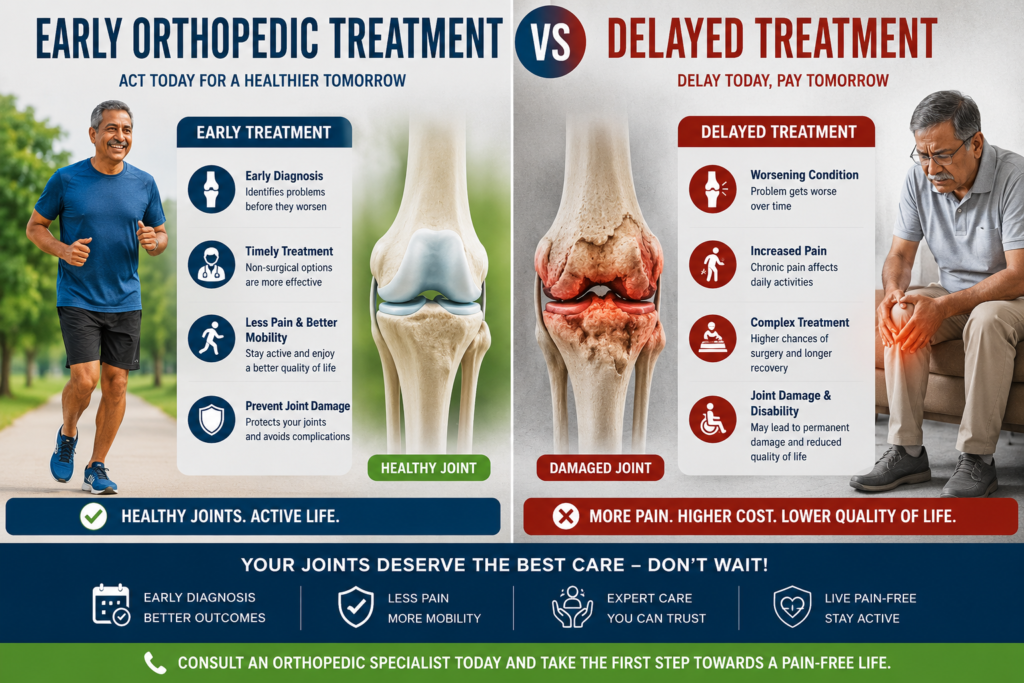
Many orthopedic conditions can be managed successfully with non-surgical treatments when diagnosed early.
Faster Recovery
Prompt treatment often results in quicker healing and reduced downtime.
Prevention of Long-Term Damage
Early intervention can prevent irreversible joint deterioration and chronic disability.
What to Expect During an Orthopedic Consultation
During your appointment, your orthopedic doctor will:
- Review your medical history
- Discuss your symptoms
- Perform a physical examination
- Recommend imaging studies such as X-rays or MRI scans if needed
- Develop a personalized treatment plan
Treatment options may include medications, physiotherapy, lifestyle modifications, injections, or surgery depending on the diagnosis.
When Is Surgery Necessary?
Not every orthopedic condition requires surgery. However, surgical treatment may be recommended when:
- Conservative treatments fail
- Severe arthritis causes significant disability
- Ligament tears cause instability
- Fractures require fixation
- Joint damage becomes advanced
Modern orthopedic procedures such as knee replacement, hip replacement, and arthroscopic surgery can provide excellent outcomes for appropriately selected patients.
Tips for Maintaining Healthy Bones and Joints
You can reduce your risk of orthopedic problems by:
- Exercising regularly
- Maintaining a healthy weight
- Following a balanced diet rich in calcium and vitamin D
- Practicing good posture
- Avoiding tobacco use
- Taking precautions to prevent falls and injuries
Frequently Asked Questions
How do I know if my joint pain is serious?
If your pain lasts more than a few weeks, interferes with daily activities, or is associated with swelling and stiffness, you should see an orthopedic doctor.
Can an orthopedic doctor treat back pain?
Yes. Orthopedic specialists diagnose and treat various spine-related conditions, including disc problems, sciatica, and spinal degeneration.
When should knee pain be evaluated?
If knee pain persists despite rest, medication, or home treatment, or if it affects walking and mobility, professional evaluation is recommended.
Can arthritis be treated without surgery?
Many patients with arthritis can manage symptoms through medications, physiotherapy, weight management, and injections before surgery becomes necessary.
What conditions do orthopedic doctors commonly treat?
Orthopedic doctors treat arthritis, fractures, sports injuries, back pain, neck pain, ligament tears, tendon injuries, and joint disorders.
Conclusion
Persistent pain, swelling, stiffness, mobility issues, or sports injuries should never be ignored. Early evaluation by an orthopedic doctor can help identify the underlying cause, prevent further damage, and improve your quality of life.
If you are experiencing ongoing joint pain, back pain, knee problems, or mobility limitations, consulting an experienced orthopedic specialist can help you get back to living an active and pain-free life.