
Undergoing knee replacement surgery is a major step toward living a pain-free and active life. However, one of the most common questions patients ask is, “How long does recovery after knee replacement take?”
The answer varies from person to person, but understanding the recovery journey can help you set realistic expectations and achieve better outcomes. Whether you are preparing for surgery or already recovering, knowing what to expect week by week can reduce anxiety and help you stay motivated.
As a Joint Replacement Surgeon in Lucknow, Dr. (Gp. Capt) Sandeep Gupta has helped thousands of patients regain mobility and return to their daily activities with confidence. This guide explains the complete knee replacement recovery timeline, including rehabilitation milestones, walking progress, and tips for a smoother recovery.
What Is Knee Replacement Recovery?
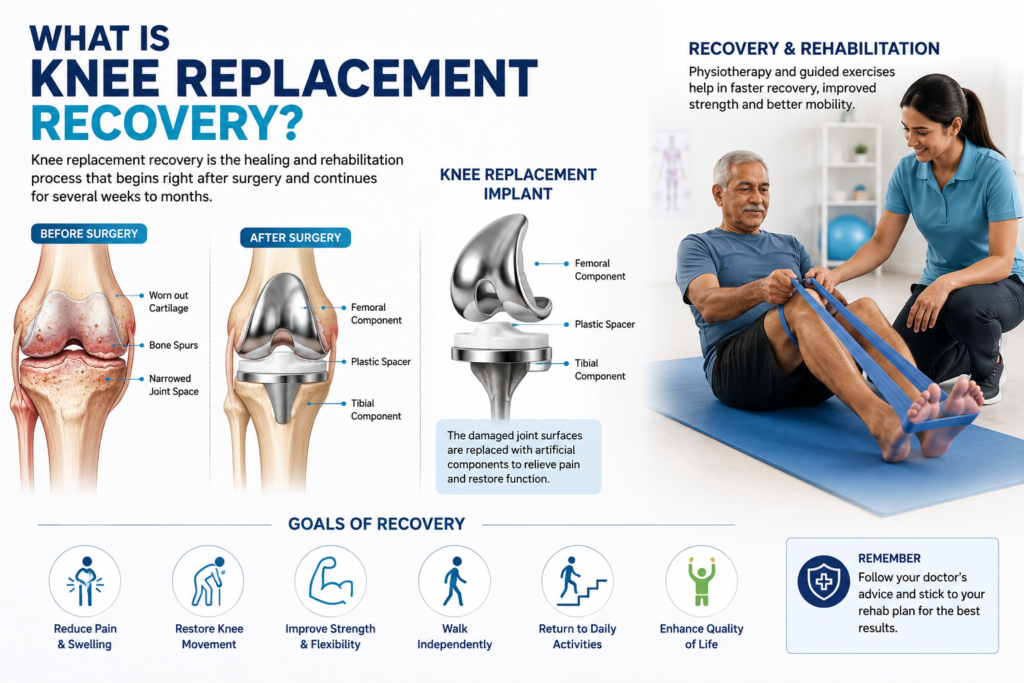
Knee replacement recovery is the healing and rehabilitation process that begins immediately after surgery and continues for several months.
The goal of recovery is to:
- Reduce pain and swelling
- Restore knee movement
- Improve strength and flexibility
- Enable independent walking
- Return to daily activities
- Enhance quality of life
A successful recovery combines medical care, physiotherapy, exercise, and patient commitment.
Why Do Patients Need Knee Replacement Surgery?
Knee replacement surgery is typically recommended when severe knee damage affects daily activities and conservative treatments no longer provide relief.
Common causes include:
- Advanced osteoarthritis
- Rheumatoid arthritis
- Post-traumatic arthritis
- Severe knee deformity
- Chronic knee pain
- Loss of mobility
- Failed previous knee surgeries
Symptoms That May Require Knee Replacement
Patients often experience:
- Persistent knee pain
- Difficulty walking
- Knee stiffness
- Swelling around the joint
- Difficulty climbing stairs
- Reduced range of motion
- Sleep disturbance due to pain
- Joint deformity
Risk Factors for Severe Knee Joint Damage
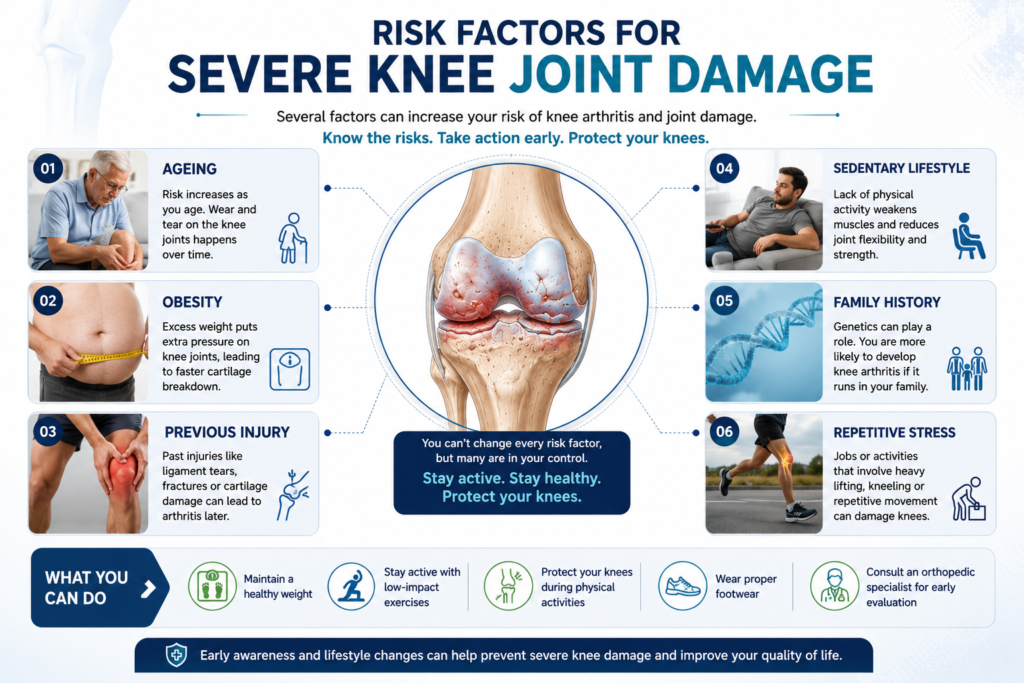
Several factors increase the likelihood of needing knee replacement surgery:
- Age above 50 years
- Obesity
- Previous knee injuries
- Family history of arthritis
- Sedentary lifestyle
- Repetitive stress on the knee
- Inflammatory arthritis
When Should You See an Orthopedic Doctor?
Consult an orthopedic specialist if you experience:
- Knee pain lasting more than a few weeks
- Difficulty walking short distances
- Inability to perform routine activities
- Night pain affecting sleep
- Frequent knee swelling
- Limited knee movement
Early consultation can prevent worsening joint damage and improve treatment outcomes.
Diagnosis and Tests
Before recommending surgery, your orthopedic surgeon may perform:
Physical Examination
Assessment of knee movement, strength, and stability.
X-rays
To evaluate joint damage and arthritis severity.
MRI Scan
Used when detailed evaluation of soft tissues is required.
Blood Tests
To rule out infection or inflammatory conditions.
Knee Replacement Recovery Timeline: Week-by-Week Guide
Day 1–3 After Surgery
Most patients begin standing and walking within 24 hours after surgery.
What to Expect
- Pain and swelling
- Use of walker support
- Physical therapy begins immediately
- Knee bending exercises start
- Hospital stay of 2–4 days
Goals
- Prevent blood clots
- Improve circulation
- Begin walking safely
- Manage pain effectively
Week 1–2
The first two weeks are crucial for recovery after knee replacement.
Common Experiences
- Swelling around the knee
- Mild discomfort
- Gradual improvement in walking
- Improved knee bending
Rehabilitation Focus
- Walking several times daily
- Strengthening exercises
- Ice therapy
- Wound care
- Pain management
Milestone
Many patients can walk short distances using a walker or crutches.
Week 3–6
This period marks significant improvement.
Improvements
- Reduced swelling
- Better flexibility
- Increased independence
- Improved balance
Physiotherapy Goals
- Increase knee bending
- Improve muscle strength
- Enhance walking pattern
- Reduce stiffness
Walking Progress
Many patients transition from a walker to a cane during this phase.
Week 7–12
This stage often feels rewarding because mobility improves substantially.
What Patients Notice
- Better endurance
- Less pain
- Improved confidence
- Easier stair climbing
Activities
- Longer walks
- Stationary cycling
- Strength exercises
- Functional training
Milestone
Many patients resume driving and light household activities after medical clearance.
Month 3–6
At this stage, most patients experience major functional improvement.
Benefits
- Improved knee strength
- Better joint flexibility
- Reduced swelling
- Increased activity level
Common Activities
- Walking independently
- Traveling comfortably
- Gardening
- Recreational activities
Month 6–12
Recovery continues even after six months.
Long-Term Improvements
- Stronger muscles
- Better balance
- Maximum range of motion
- Enhanced quality of life
Most patients achieve their best results within one year after surgery.
Treatment Options for Knee Arthritis Before Surgery
Not every patient requires immediate surgery.
Non-Surgical Treatments
- Weight management
- Activity modification
- Knee braces
- Lifestyle changes
Physiotherapy
Physical therapy can help:
- Strengthen muscles
- Improve flexibility
- Reduce pain
- Enhance joint function
Medications
- Anti-inflammatory medicines
- Pain relievers
- Joint injections
Advanced Orthopedic Procedures
Depending on the condition, options may include:
- PRP therapy
- Viscosupplementation
- Arthroscopic procedures
Surgical Treatment
When conservative treatments fail, total knee replacement offers long-term relief and improved mobility.
Benefits of Early Treatment
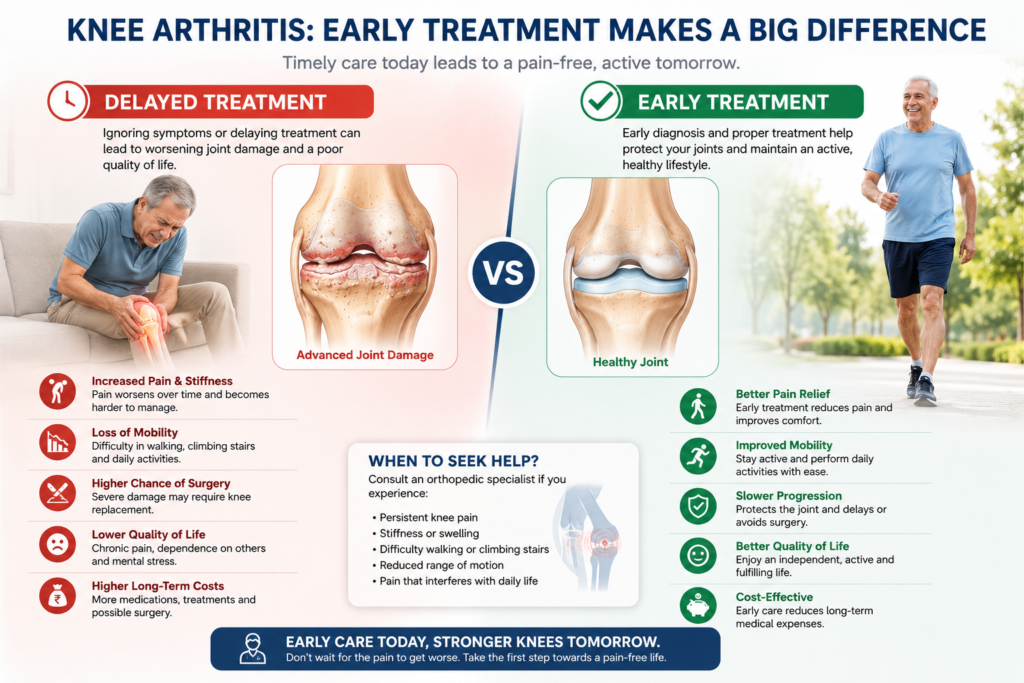
Seeking treatment early can:
- Prevent worsening joint damage
- Reduce pain significantly
- Improve mobility
- Enhance surgical outcomes
- Speed up recovery
- Improve overall quality of life
Tips for Faster Recovery After Knee Replacement
Follow these expert recommendations:
- Attend all physiotherapy sessions
- Perform exercises regularly
- Walk daily as advised
- Maintain a healthy weight
- Eat a protein-rich diet
- Stay hydrated
- Avoid smoking
- Take medications as prescribed
- Follow surgeon instructions carefully
Why Choose Dr. (Gp. Capt) Sandeep Gupta in Lucknow?
When considering knee replacement surgery, choosing an experienced orthopedic surgeon is essential.
26+ Years of Orthopedic Experience
Dr. Sandeep Gupta has served in premier healthcare institutions and the Armed Forces, bringing decades of expertise to patient care.
Joint Replacement Expertise
Specialized in:
- Total Knee Replacement
- Partial Knee Replacement
- Hip Replacement Surgery
- Complex Joint Reconstruction
Advanced Surgical Techniques
Utilizes modern techniques designed to:
- Reduce pain
- Improve precision
- Enhance recovery
- Maximize implant longevity
Personalized Patient Care
Every treatment plan is tailored to the patient’s age, lifestyle, and recovery goals.
High Success Rate
Patients consistently report improved mobility, pain relief, and satisfaction after treatment.
Frequently Asked Questions
1. How long does knee replacement recovery take?
Most patients recover significantly within 3–6 months, while full recovery may take up to one year.
2. When can I walk after knee replacement surgery?
Most patients begin walking with assistance within 24 hours after surgery.
3. How painful is recovery after knee replacement?
Pain gradually decreases over several weeks and is managed through medication and physiotherapy.
4. When can I climb stairs?
Many patients can safely climb stairs within 4–8 weeks with proper rehabilitation.
5. How long will swelling last?
Swelling may persist for several months but gradually decreases over time.
6. Can I drive after knee replacement?
Driving is usually possible within 4–8 weeks after medical clearance.
7. Is physiotherapy necessary?
Yes. Physiotherapy is essential for restoring strength, flexibility, and function.
8. What exercises help recovery?
Walking, knee bending exercises, straight-leg raises, and strengthening exercises are commonly recommended.
9. Can I travel after surgery?
Short trips may be possible within a few weeks, while long-distance travel should be discussed with your surgeon.
10. How successful is knee replacement surgery?
Knee replacement has a high success rate and provides long-term pain relief for most patients.
Conclusion
Knee replacement surgery can be life-changing for individuals struggling with chronic knee pain and limited mobility. Understanding the knee replacement recovery timeline helps patients stay informed, motivated, and committed to rehabilitation.
With proper physiotherapy, regular exercise, and expert surgical care, most patients achieve excellent outcomes and return to an active lifestyle. If you are considering knee replacement surgery in Lucknow, consulting an experienced orthopedic specialist can help you make the right decision for your long-term joint health.
Book Your Consultation Today
Take the first step toward pain-free movement and improved quality of life.
📍 Tender Palm Super Specialty Hospital, Lucknow
OPD No. 17, Amar Shaheed Path, Near Ekana International Cricket Stadium Road, Sector-7, Gomti Nagar, Lucknow
📞 9380677777